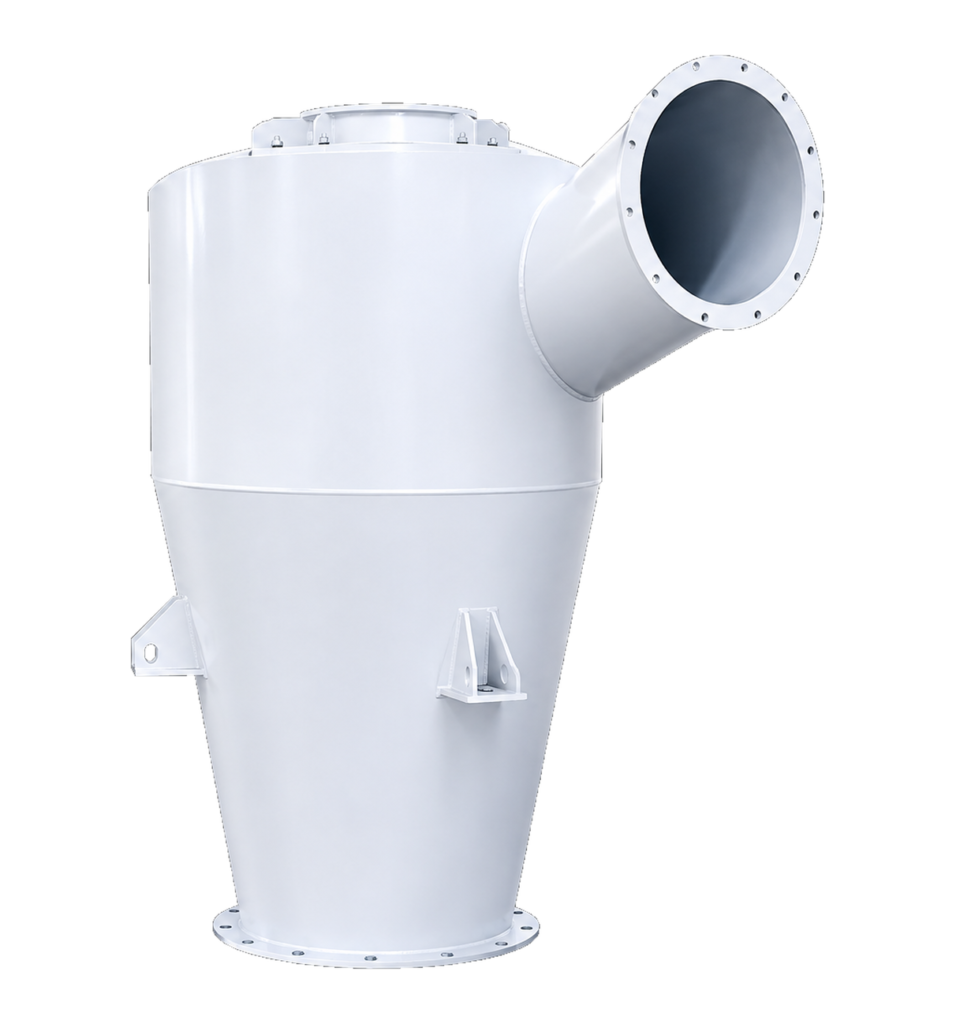
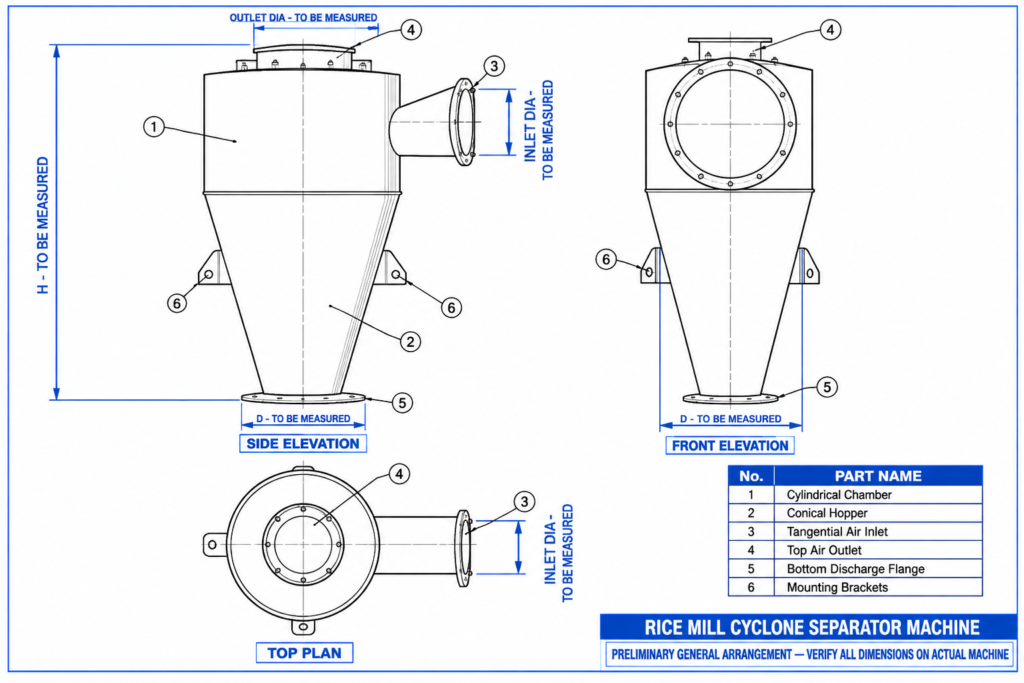
A cyclone separator machine efficiently removes dust, particles, and lightweight impurities from industrial air streams using centrifugal separation technology. Its specially designed cylindrical and conical structure generates swirling airflow, separating contaminants from cleaner air. Suitable for grain processing and industrial applications, it improves product cleanliness, reduces airborne dust, supports environmental protection, and ensures reliable operation with minimal maintenance requirements in continuous production environments.
The cyclone separator removes airborne dust and particles through centrifugal force. Its cylindrical and conical design promotes efficient separation, cleaner airflow, improved workplace cleanliness, and reliable industrial performance.
Cleaner Air Discharge: Reduces dust emissions significantly.
02 / Applications
Main uses
01
Removing airborne dust from grain processing operations.
02
Separating fine impurities during agricultural material handling.
03
Collecting dust from rice milling machinery exhaust.
04
Improving air quality inside wheat flour mills.
05
Recovering valuable particles from industrial process airflow.
06
Controlling dust emissions in grain storage facilities.
03 / Material compatibility
Suitable materials
Materials validated for the machine. Compatibility can depend on moisture, particle size, abrasiveness, temperature and product characteristics.
Paddy Dust
Wheat Dust
Rice Bran Dust
Grain Husk
Maize Dust
Flour Dust
Fine Bran
Chaff
Sand Particles
Sawdust
Agricultural Dust
Industrial Powder
04 / Process
Working principle
The cyclone separator uses centrifugal force generated by swirling airflow to separate dust and particles from air. Contaminated air enters tangentially, creating rotational movement that drives heavier particles toward the outer wall. Separated particles descend into the collection hopper, while cleaner air exits through the central outlet.
Dusty Air Inlet
Contaminated air enters through tangential inlet opening.
Airflow Generation
Incoming airflow creates rotational movement inside separator.